Table of Contents
Pricing Instagram sponsorships can feel like throwing a dart at a board in a dark room. Should a creator with 50,000 followers charge $500 or $2,500? What if they have low engagement? What if their niche is highly lucrative like finance, compared to a general lifestyle page? There are numerous variables that dictate the true market value of an Instagram influencer.
To eliminate the guesswork, brands and creators alike rely on sophisticated algorithms to determine fair pricing. This is where an Instagram Earnings Calculator comes in.
🔧 Recommended ChafikTech Tool
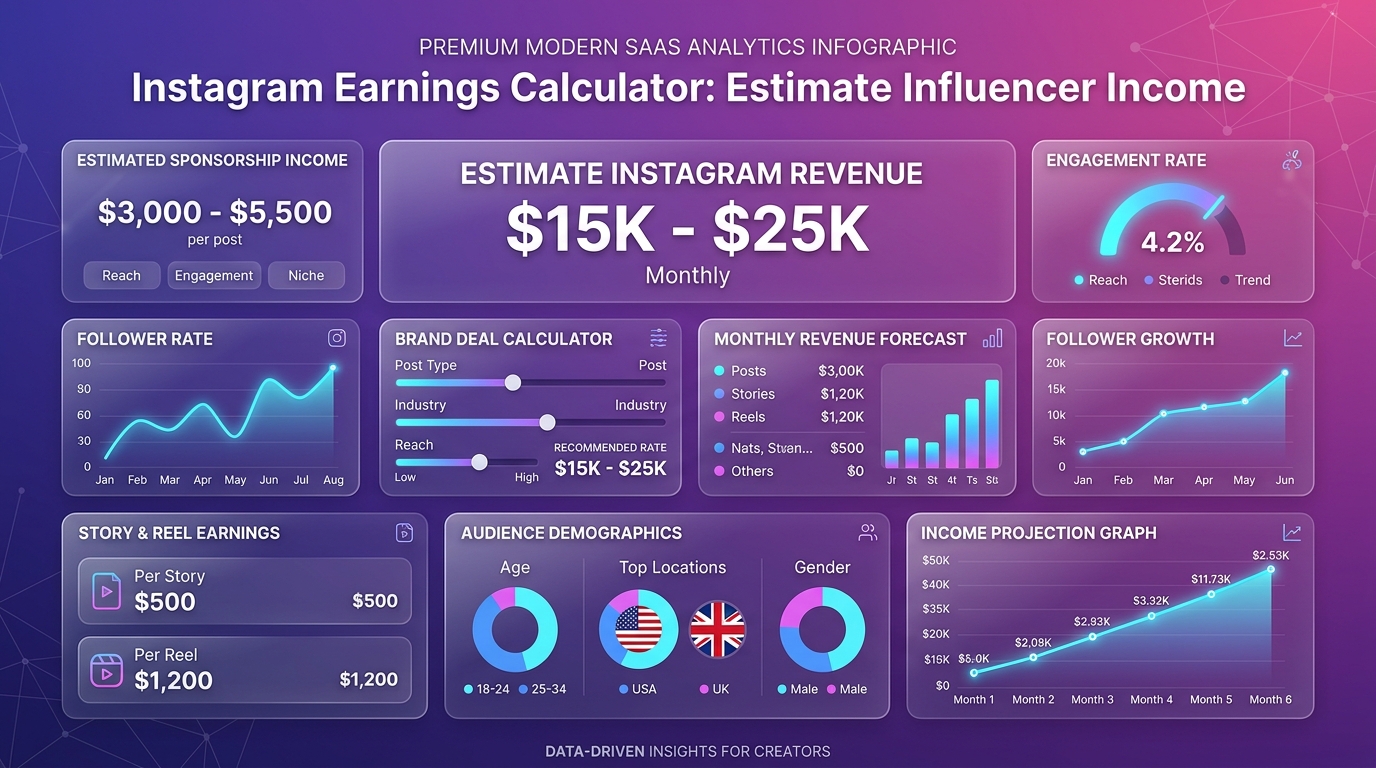
Why you need it: Our proprietary calculator considers follower count, true engagement rate, and niche multiplier effects to output an industry-standard estimate for sponsored posts, stories, and reels. Use this data to anchor your next negotiation.
How the Instagram Earnings Calculator Works
At its core, a reliable earnings calculator moves beyond simple follower counts. While historically brands paid a flat rate per thousand followers ($10 per 1,000 followers was the old standard), the modern creator economy recognizes that an engaged micro-audience is far more valuable than a massive, passive one.
Here are the three primary pillars our calculator uses to estimate influencer income:
1. Follower Count (The Baseline)
Follower count still sets the initial baseline for reach. However, the value of each additional follower operates on a sliding scale. A creator with 10,000 followers might charge a higher CPM (Cost Per Mille, or cost per thousand impressions) than a celebrity with 10 million followers, because the micro-influencer's audience is typically more targeted and responsive.
2. True Engagement Rate (The Multiplier)
This is the most critical metric in modern influencer marketing. For a deep dive, check out our guide on Instagram Engagement Rate Explained. Engagement rate measures the percentage of followers who actively interact with content (likes, comments, shares, saves). A creator with 20,000 followers and a 10% engagement rate is often worth significantly more to a brand than a creator with 100,000 followers and a 1% engagement rate.
3. The Niche / Industry Premium
Not all followers are created equal in the eyes of advertisers. A follower in the personal finance space is highly monetizable (credit card companies, brokers, software). A follower on a meme page is much harder to monetize.
| Niche | Value Multiplier | Why? |
|---|---|---|
| Finance & Crypto | 2.5x - 4.0x | High lifetime value of customers for these brands |
| Tech & SaaS | 2.0x - 3.0x | Expensive products, B2B potential |
| Health & Fitness | 1.2x - 1.5x | Consistent supplement and apparel purchases |
| Fashion & Beauty | 1.0x - 1.3x | High conversion rates but saturated market |
| Comedy & Memes | 0.5x - 0.8x | Low intent to purchase, general audience |
Step-by-Step Guide: Using the Instagram Calculator
Whether you are a creator determining your rates or a brand auditing a potential partner, follow these steps to get the most accurate estimate:
- Gather Data: Pull the exact follower count. Then, look at the last 10-12 posts. Calculate the average number of interactions (likes + comments) per post.
- Calculate Engagement: Divide the average interactions by the total follower count, then multiply by 100 to get a percentage. (Or, let the calculator do this for you by inputting the raw data).
- Select the Deliverable: Are you pricing a static photo post, an Instagram Reel, or a 24-hour Story? Reels currently command a premium due to their algorithmic reach and virality potential, while Stories are priced lower due to their ephemeral nature.
- Factor in Exclusivity and Usage Rights: This is a crucial step often missed. If a brand wants to use your post in their own paid ads (whitelisting), or if they demand you don't work with competitors for 3 months, you must add 30-50% on top of the calculator's estimate.
The Difference Between Posts, Reels, and Stories
Pricing varies wildly based on the format of the content you are delivering. The effort required, the lifespan of the content, and the expected reach all play a part.
- Instagram Posts (Static/Carousel): The traditional standard. They live on the feed forever but often see the majority of their engagement within the first 48 hours. Carousels perform better and can command slightly higher rates.
- Instagram Reels: Currently the most lucrative format. Brands are willing to pay a premium for Reels because they are pushed heavily to non-followers via the explore page, offering a high ceiling for viral reach. They also require significantly more production time (scripting, filming, editing).
- Instagram Stories: Typically priced at 25-35% of a static post rate. They disappear in 24 hours, but they offer incredible direct conversion rates because of the built-in link sticker. Stories are excellent for direct-response marketing (getting people to buy right now).
Influencer Tier Pricing Table (Average Guidelines)
| Influencer Tier | Follower Range | Average Engagement | Estimated Price Per Post |
|---|---|---|---|
| Nano-Influencer | 1,000 - 10,000 | 5% - 8% | $10 - $100 |
| Micro-Influencer | 10,000 - 50,000 | 3% - 6% | $100 - $500 |
| Mid-Tier | 50,000 - 500,000 | 2% - 4% | $500 - $5,000 |
| Macro-Influencer | 500,000 - 1,000,000 | 1.5% - 3% | $5,000 - $10,000+ |
Common Negotiation Mistakes
- Charging Based on Followers Alone: If you have 100,000 followers but only get 500 likes per post, a brand will not pay you macro-influencer rates. Engagement is the true currency.
- Selling Permanent Posts for Story Prices: Instagram Stories disappear in 24 hours. A permanent grid post or Reel provides long-term SEO and discovery value and should be priced significantly higher.
Best Practices for Pitching
- Provide a Screenshot of the Calculator: When a brand asks for your rates, attach a screenshot of the ChafikTech calculator output along with your media kit to prove your rates are aligned with industry standards.
- Bundle Offerings: Instead of selling one post, offer a package (e.g., 1 Post + 3 Stories + Link in Bio) to increase the total contract value.
Frequently Asked Questions
Conclusion
Knowing your worth as a creator is the first step toward building a sustainable career. By moving away from arbitrary numbers and relying on data-driven tools like our Instagram Earnings Calculator, you can price your sponsorships accurately, negotiate with confidence, and maximize your influencer income.
Remember, the calculator provides an estimate, but your unique voice, production quality, and the specific needs of the brand will always dictate the final contract.