Table of Contents
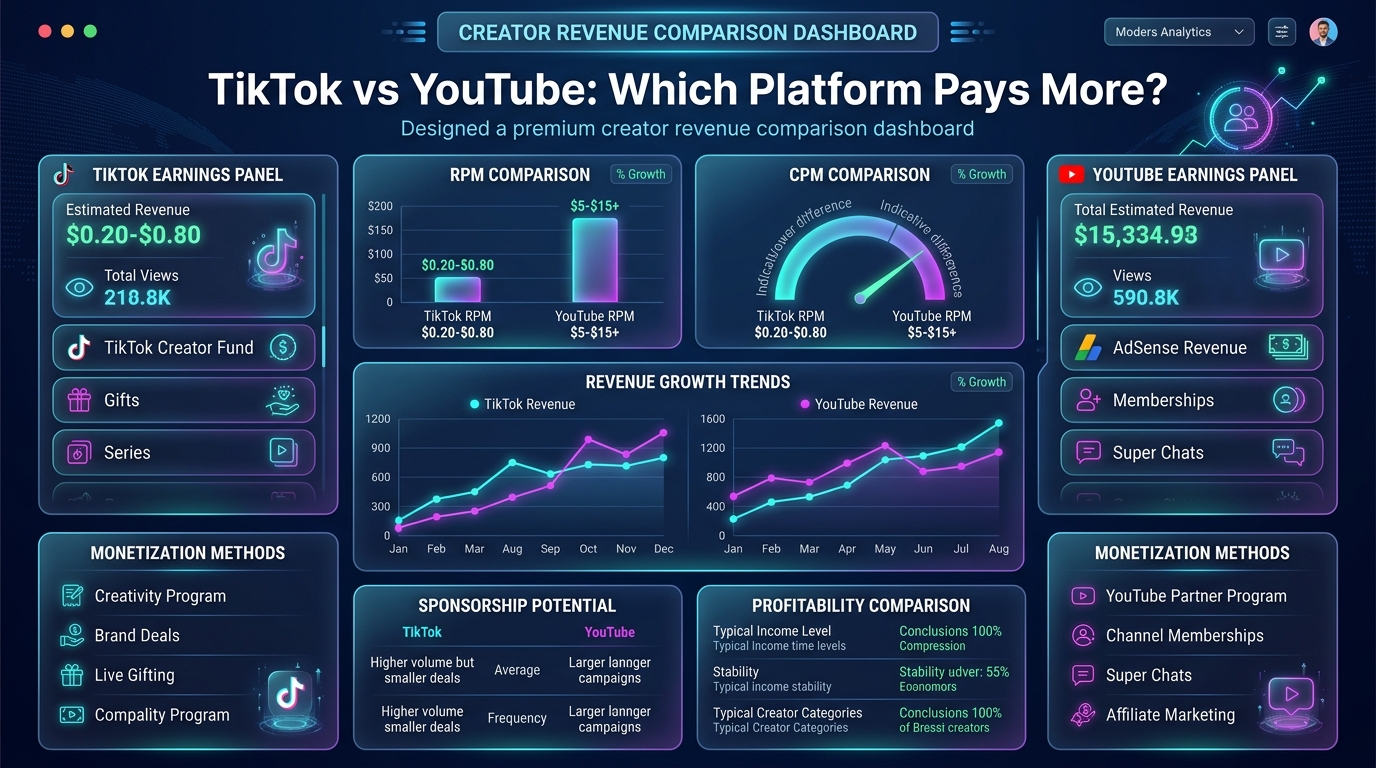
The eternal question for new and veteran creators alike is: where should you invest your time to make the most money? The rise of short-form content has turned the creator economy on its head, but when it comes to actual payout, the battle between TikTok and YouTube is incredibly nuanced.
Let's dive into an objective comparison of the monetization models between YouTube's ad-revenue share and TikTok's various creator rewards programs.
🔧 Recommended ChafikTech Tools
Why you need them: Plug your expected views into both calculators to see real-time side-by-side estimates of what each platform would potentially pay for similar audience sizes.
The YouTube Monetization Model: True Ad Share
YouTube's Partner Program (YPP) remains the gold standard in the creator economy. Why? Because it offers a true revenue split. For long-form videos, creators receive 55% of the ad revenue, while YouTube keeps 45%. For Shorts, creators get 45% of the allocated ad pool.
This means as YouTube makes more money from advertisers, you make more money. It is a highly scalable model.
The TikTok Monetization Model: Rewards Pools
TikTok initially operated the "Creator Fund," which was a static pool of money. No matter how much money TikTok made, the pool remained the same size. This meant that as more creators joined, payouts per creator plummeted.
Recently, TikTok shifted to the Creativity Program Beta (now just Creator Rewards Program), which focuses on videos over 1 minute long. This new program pays significantly higher RPMs than the old fund, but it still operates differently than a direct ad-revenue share.
Side-by-Side Payout Comparison
Here is a breakdown of what you might expect when comparing the two platforms across different formats.
| Format | YouTube RPM (Est.) | TikTok RPM (Est.) | Monetization Strategy |
|---|---|---|---|
| Short-Form (<1 min) | $0.01 - $0.07 (Shorts) | $0.00 - $0.03 (Old Fund/Standard) | Primarily used for audience growth |
| Medium-Form (1-3 mins) | $1.50 - $4.00 | $0.30 - $1.20 (Creator Rewards Program) | TikTok's sweet spot for earnings |
| Long-Form (8+ mins) | $4.00 - $12.00+ (Multiple Mid-Rolls) | N/A (Not optimized for the platform) | YouTube's domain for high income |
YouTube Shorts vs TikTok: The Short-Form Battle
When comparing pure short-form content, neither platform pays incredibly well through their built-in monetization programs. However, YouTube Shorts offers a slight edge because it operates on a revenue-sharing model (45% for creators). The biggest advantage of Shorts, however, is its ability to funnel viewers into your highly lucrative long-form YouTube videos.
Sponsorships and Brand Deals
Platform payouts are only half the story. Brand deals are often where the real money is made.
- YouTube Brand Deals: Command a much higher premium. Because long-form videos have a longer shelf life and foster deeper parasocial relationships, brands are willing to pay $20-$50 CPMs for integrations.
- TikTok Brand Deals: Often rely on viral potential but suffer from shorter shelf lives. CPMs are generally lower, but the sheer volume of views can sometimes make up for the lower rate.
YouTube vs TikTok Payout Comparison
| Format | YouTube Earnings (Per 1M Views) | TikTok Earnings (Per 1M Views) | Clear Winner |
|---|---|---|---|
| Under 60 Seconds | $20 - $70 (Shorts) | $0 (Not Eligible) | YouTube |
| 1 - 3 Minutes | $1,500 - $3,000 | $500 - $1,200 (Rewards) | YouTube |
| 10+ Minutes | $4,000 - $12,000+ | N/A (Rare on TikTok) | YouTube |
| Brand Sponsorships (Avg) | $20 - $40 CPM | $10 - $20 CPM | YouTube |
Common Mistakes
- Treating the Platforms the Same: Uploading a horizontal, highly edited 10-minute YouTube video directly to TikTok without formatting it natively will result in zero views.
- Choosing Only One: The biggest mistake a creator can make is platform monogamy. If TikTok gets banned in your country, your business dies overnight.
Best Practices
- The Omnichannel Approach: Record your main content horizontally for YouTube (to capture high RPMs). Then, edit 3 vertical, 60-second clips from that video to post on TikTok to drive top-of-funnel awareness.
- Build a Community on YouTube: Use TikTok for virality and rapid audience acquisition, but constantly funnel those followers to your YouTube channel, where they can form a deeper parasocial relationship with you and generate higher ad revenue.
⚖️ Compare the Math Directly
Curious how the exact same number of views pays out across both platforms? Open the YouTube Calculator and the TikTok Calculator in side-by-side tabs to see the massive difference in AdSense revenue.
Frequently Asked Questions
Conclusion
If your goal is quick exposure and rapid audience growth, TikTok is unmatched. However, if your goal is to build a highly profitable, sustainable business with evergreen revenue, YouTube is the clear winner.
The smartest creators don't choose just one. They use TikTok to cast a wide net and go viral, then funnel that massive audience to their YouTube channel where the real monetization happens.