Table of Contents
Keyword research is the foundation of every successful SEO strategy. For new websites with little domain authority and no established traffic, choosing the wrong keywords means spending months writing content that will never rank. Choosing the right keywords means landing on page one of Google within weeks, attracting not just any traffic, but the specific audience that advertisers are willing to pay premium rates to reach.
This guide is specifically designed for new website owners — sites with a Domain Rating under 20 — who need a realistic path to first-page rankings and meaningful ad revenue.
🔧 Recommended ChafikTech Tool
Keyword research directly determines your RPM. A visitor arriving from a keyword like "personal injury lawyer near me" (CPC: $80+) generates far more ad revenue than a visitor from "funny cat videos" (CPC: $0.10). Use our calculator to model how targeting high-CPC keywords vs low-CPC keywords impacts your monthly earnings at the same traffic volume.
Why New Websites Cannot Target Competitive Keywords
The first page of Google for any keyword is a competition. Each of the top 10 results earned its spot by accumulating years of authority, backlinks, and engagement signals. A brand-new website competing for "best credit cards" against sites with Domain Ratings of 70–90 is the equivalent of a new boxer being matched against a world champion.
The strategy for new websites is not to fight the heavyweights — it is to find the underserved corners of the market where your zero-authority site can win.
The Three Dimensions of a Good Keyword
Every keyword you target should be evaluated across three dimensions simultaneously:
- Search Volume: How many people search this term monthly? For new sites, target 300–3,000/month. High volume keywords (50,000+/month) are almost always dominated by established players.
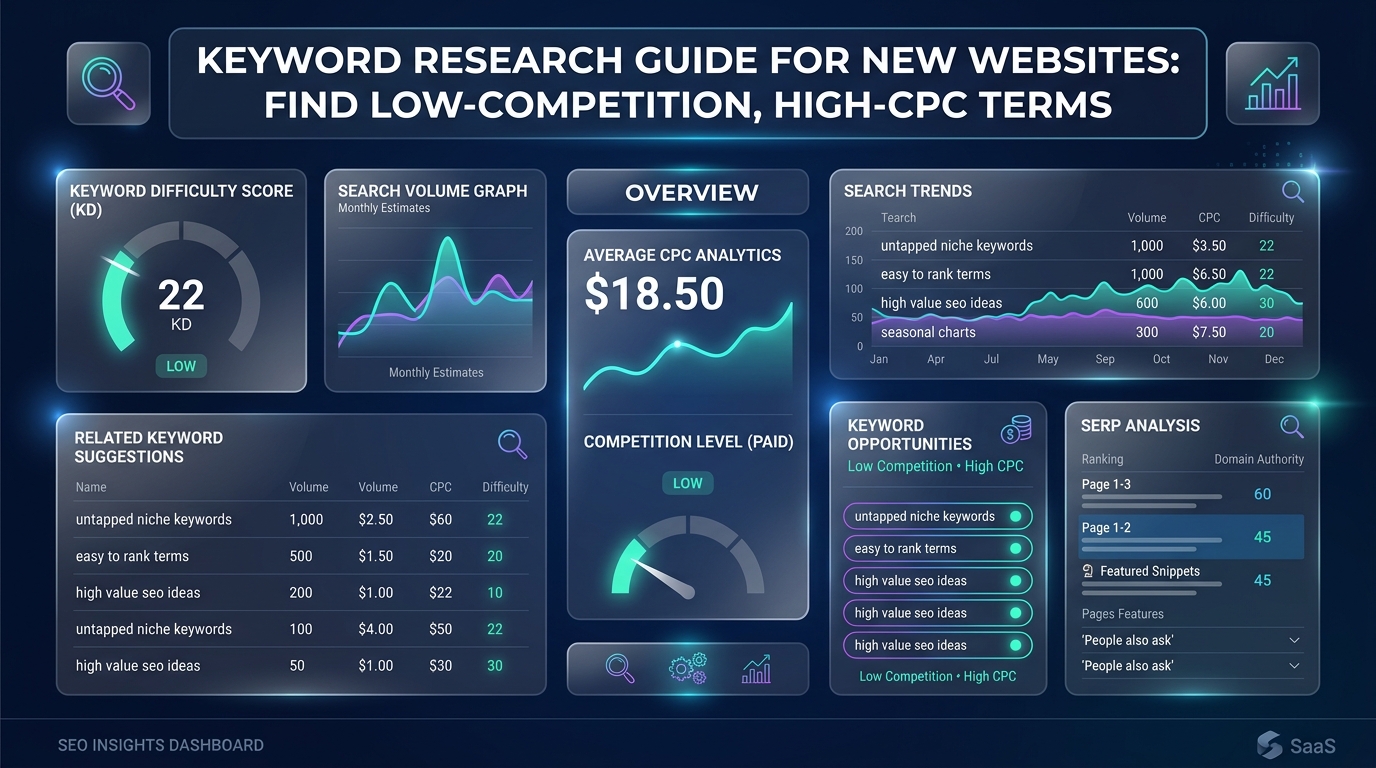
- Keyword Difficulty (KD): How hard is it to rank in the top 10? Target KD under 25–30 for new sites (scale is 0–100). This data is available in Ahrefs, SEMrush, and Ubersuggest.
- Cost Per Click (CPC): How much do advertisers pay per click for ads on this keyword? High CPC = high-paying advertisers = high AdSense RPM. Finance, legal, insurance, and tech keywords routinely hit $5–$50 CPC.
| Niche | Avg CPC | Expected RPM | Competition Level |
|---|---|---|---|
| Personal Finance / Insurance | $8–$50 | $20–$80 | Very High |
| Technology / Software | $5–$30 | $15–$50 | High |
| Digital Marketing / SEO | $4–$20 | $10–$35 | High |
| Health / Wellness | $2–$10 | $8–$25 | Medium |
| Entertainment / Celebrity | $0.30–$1.50 | $1–$5 | Low |
Step-by-Step Keyword Research Process for New Websites
Step 1: Identify Your Seed Topics
A "seed topic" is the broad subject area your website covers. For ChafikTech, seed topics include "YouTube earnings," "AdSense optimization," and "social media monetization." Write down 5–10 seed topics that represent the full scope of your website's expertise.
Step 2: Generate Long-Tail Variations
Long-tail keywords are longer, more specific phrases (4–7 words) that stem from your seed topics. They have lower search volume but dramatically lower competition and often higher commercial intent. Use these free methods:
- Google Autocomplete: Type your seed topic into Google and note all the auto-suggested completions. These are real queries people search for.
- People Also Ask Box: Every Google results page shows related questions. These are pre-packaged long-tail keyword ideas.
- Google Keyword Planner (Free): Requires a Google Ads account (free, no ads required). Provides exact monthly search volumes and CPC data.
- AnswerThePublic: Generates a visual map of questions, comparisons, and prepositions related to your seed topic.
Step 3: Evaluate and Filter Keywords
Use Ubersuggest (free tier) or Ahrefs' free keyword checker to find the KD score for your candidate keywords. Create a spreadsheet with columns: Keyword | Monthly Volume | KD | CPC | Search Intent. Target keywords where Volume is 300–3,000, KD is under 25, and CPC is above $1.50 for your niche.
Step 4: Analyze the Current Page-One Competitors
Before committing to a keyword, manually search for it in an Incognito window. Study the top 3 results: What is their Domain Rating? How long is their article? How many backlinks do they have? If page one is dominated exclusively by DA 60+ sites, move on to a less competitive keyword even if the metrics look attractive.
Keyword Strategy Comparison Table
| Keyword Type | Search Volume | Competition Level | New Site Ranking Chance |
|---|---|---|---|
| "Credit Cards" (Head Keyword) | 1M+ / month | Extreme | 0% (Impossible) |
| "Best travel credit cards" | 50k / month | Very High | < 5% (Requires heavy backlinks) |
| "Best travel credit card for traveling nurses" | 500 / month | Low to Medium | 60%+ (With excellent content) |
| "Is the Chase Sapphire reserve worth it for college students" | 50 / month | Very Low | 90%+ (Low hanging fruit) |
Common Research Mistakes
- Chasing High Search Volume: A keyword with 10,000 searches a month is useless to a new site because Forbes and NerdWallet occupy the top 10 spots. You will get zero traffic on page 5.
- Ignoring the User Intent: If you write an informational blog post for a keyword where all the top-ranking pages are e-commerce product pages, you will never rank. Google has determined the user wants to buy, not read.
Best Practices
- Target "Forum Keywords": If you search a keyword and the top results are Reddit, Quora, or ancient forums from 2010, that is a massive green light. Google prefers dedicated articles over forum threads.
- Use the Google Alphabet Soup Method: Type your seed keyword into Google and append the letter "a", then "b", then "c", to see the auto-complete suggestions. These are highly specific long-tail keywords that expensive tools often miss.
📈 Forecast Your Website Revenue
Once you gather a list of low-competition keywords, estimate the total monthly search volume you can realistically capture. Plug that number into the Website AdSense Calculator to forecast your future earnings.
Frequently Asked Questions
Conclusion
For a new website, keyword research is the highest-ROI activity you can do before writing a single word. The right keyword strategy means every article you publish has a realistic shot at page-one traffic. The wrong strategy means months of wasted effort. Target low-competition, high-CPC long-tail keywords initially. Build authority. Then gradually target more competitive keywords as your Domain Rating grows. Use our Website AdSense Calculator to keep your revenue projections tied to your keyword targets at every stage.