Table of Contents
The difference between ranking #1 and ranking #5 on Google for the same keyword is not just a matter of pride — it is a financial gulf. According to click-through-rate studies, the #1 position receives approximately 27–34% of all clicks, while the #5 position receives less than 6%. For a keyword with 10,000 monthly searches, that is the difference between 2,700 and 600 monthly visitors — from a single keyword.
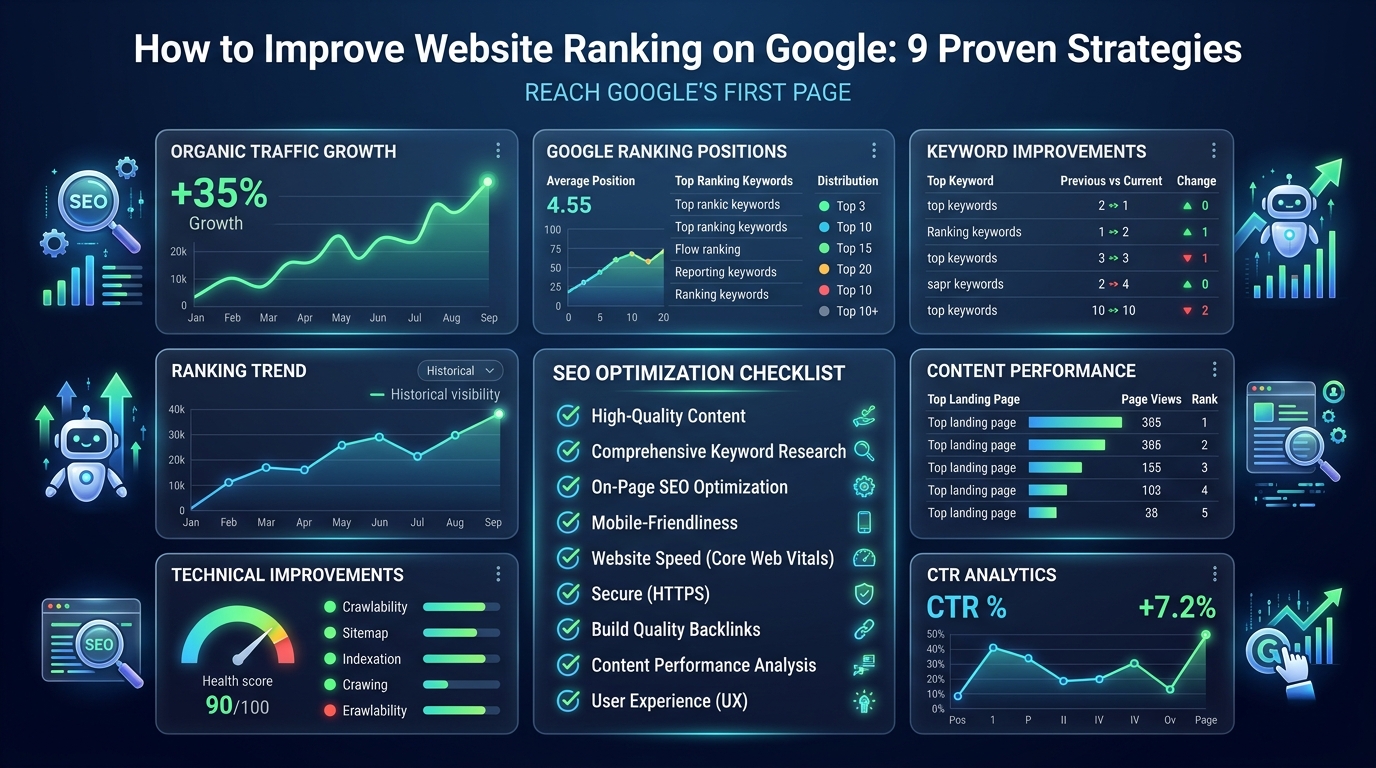
This guide focuses on proven, algorithm-resistant strategies that will move your website up Google's search results over a 3–12 month timeline.
🔧 Recommended ChafikTech Tool
Set a ranking goal that has a real monetary value. Use our calculator to model what 50,000 monthly visitors vs 100,000 monthly visitors means in AdSense revenue for your niche. This gives you a concrete financial reason to pursue each ranking improvement.
Strategy 1: Target the Right Keywords Before Writing
The most common SEO mistake new websites make is writing content first and choosing keywords second. Targeting keywords that are too competitive (DA 60+ sites dominating page one) means you will never rank regardless of content quality. Instead, use keyword research tools to find queries with:
- Monthly search volume: 500–5,000 for new sites (enough traffic to matter).
- Keyword Difficulty (KD): Under 30/100 for websites with DA under 25.
- High commercial intent: Keywords containing "best," "how to," "calculator," or "vs" typically attract engaged users and higher-paying advertisers.
Strategy 2: Write Content That Satisfies Search Intent
Google's primary job is to match users with the most satisfying result for their query. Before writing, search for your target keyword and analyze the top 3 results. Ask: What format do they use (listicle, step-by-step guide, comparison)? How long are they? What questions do they answer that you haven't thought of? Your content must comprehensively satisfy the same intent.
Strategy 3: Optimize Your Title Tag and Meta Description
Your title tag is the single most important on-page SEO element. It must include your target keyword naturally, ideally within the first 60 characters. Your meta description (under 160 characters) does not directly affect rankings but heavily influences click-through rate from the SERP — treat it as your advertisement headline.
| Element | What to Include | Max Length |
|---|---|---|
| Title Tag | Primary keyword + brand name or value proposition | 60 characters |
| Meta Description | Benefit + primary keyword + call to action | 160 characters |
| H1 Tag | Primary keyword (can be longer than title tag) | 70 characters |
| URL Slug | Primary keyword, hyphenated, no stop words | 60 characters |
Strategy 4: Build Topical Authority Through Content Clusters
Rather than publishing one article per disconnected topic, build "Content Clusters." Choose one broad Pillar topic (e.g., "Website Monetization") and create a comprehensive Pillar Page about it. Then create 8–15 Cluster Pages that cover specific sub-topics (e.g., "AdSense RPM explained," "best ad placements for blogs"), all internally linked back to the Pillar Page. This signals deep topical authority to Google.
Strategy 5: Pass Google's Core Web Vitals Assessment
Since the Page Experience update, Google actively suppresses websites that fail the Core Web Vitals assessment (LCP, INP, CLS). Check your scores via Google Search Console. A site that passes this assessment has a clear ranking advantage over a competitor with identical content that fails.
Strategy 6: Earn High-Quality Backlinks
Backlinks remain among the strongest ranking signals. Prioritize these three link-earning tactics:
- Create data-driven original research that journalists cite.
- Guest post on industry publications with real audiences in your niche.
- Broken link building: find dead links on high-DA sites and offer your content as a replacement.
Strategy 7: Update Existing Content Regularly
Google freshness signals reward pages that are regularly updated. When you add new statistics, update outdated information, expand thin sections, and change the publication date, you signal to Google that the content is current. Audit your top-20 organic traffic pages every 6 months and update them.
Strategy 8: Improve Your Click-Through Rate from Search Results
If your page already ranks on page one but at position 7–10, improving its click-through rate (CTR) can push it up without any new links or content. Test different title tags and meta descriptions using Search Console data. Adding numbers (e.g., "9 Proven Strategies"), power words ("Complete," "Ultimate"), and the current year to title tags reliably increases CTR.
Strategy 9: Reduce Your Bounce Rate and Increase Dwell Time
Google measures how quickly users return to the SERP after clicking your result. If most users click back within 5 seconds, that is a strong signal that your content failed to satisfy the query. Hook users immediately with a clear introduction that directly addresses their question, use visuals to break up long text, and place strategic internal links to keep them exploring more of your site.
Master Search Intent
Google's primary goal is to provide the user with the exact answer they are looking for. If a user searches for "how to tie a tie," they want a step-by-step tutorial (preferably with images or video), not a 2,000-word essay on the history of neckties. Matching the specific format and intent of the query is the foundation of high rankings.
SEO Optimization Impact Comparison
| Optimization Tactic | Effort Required | Impact on Rankings | Time to See Results |
|---|---|---|---|
| Satisfying Search Intent | High | Critical | Immediate upon indexing |
| Earning Quality Backlinks | Very High | High | Weeks to Months |
| Optimizing Title Tags & H1s | Low | Medium | Days |
| Improving Core Web Vitals | Medium | Moderate | Weeks |
| Fixing Broken Internal Links | Low | Low (Foundational) | Days |
Common Mistakes
- Keyword Stuffing: Forcing your target keyword into every paragraph makes the content unreadable and can trigger Google's spam filters. Write naturally.
- Ignoring Existing Content: Many webmasters only focus on publishing new articles while ignoring their old content. Updating old articles with fresh information is often the fastest way to boost rankings.
Best Practices
- Optimize for Featured Snippets: Structure your content with clear H2s, bulleted lists, and concise summary paragraphs to increase your chances of capturing the "Position Zero" featured snippet.
- Build Topical Authority: Don't just write one article about a broad topic. Write a pillar post surrounded by 5-10 supporting cluster articles, all interlinked via a strategic internal linking structure.
🚀 Turn Higher Rankings into Revenue
Higher rankings mean more traffic, and more traffic means more money. Calculate the financial impact of moving from Position 5 to Position 1 using the Website AdSense Calculator.
Frequently Asked Questions
Conclusion
Improving your Google ranking is not a single action — it is a compounding system of consistently doing the right things. Target the right keywords, satisfy user intent completely, build topical authority, earn backlinks, and maintain technical excellence. Each improvement feeds the next. Model the financial result of your target ranking with our Website AdSense Calculator to keep your momentum fueled by clear revenue targets.